.png)


Community calls for action to restore polluted Cooks River
- Zac Nikolovski

- Nov 16, 2025
- 4 min read
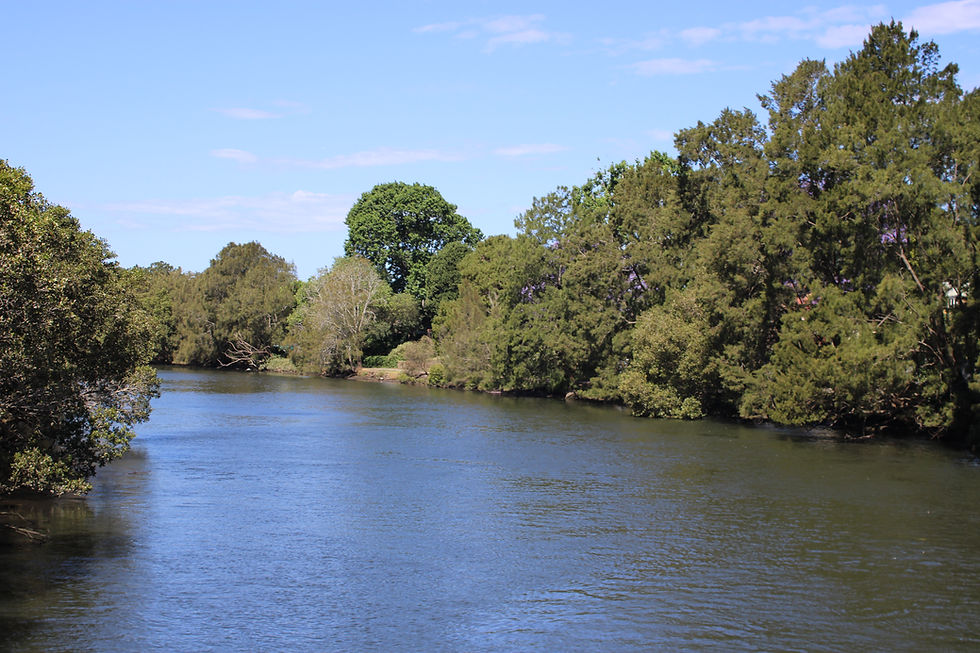
A growing coalition of community groups have launched a campaign to “fix” the Cooks River and remove the crumbling steel that has lined its banks for decades.
At a packed forum on November 8, nearly 150 locals gathered at the Rowers on Cooks River club in Wolli Creek, united by frustration that the river remains constrained by rusting banks, concrete channels and persistent pollution that chokes its health.
The forum featured several key voices from the river care community. Peter Munro, long-time coordinator of the volunteer clean-up group Mudcrabs, highlighted the dangers corroding steel sheeting poses to ecology.
“60 years later, this is what it’s starting to look like. It’s rusted; it’s corroded; it’s breaking down,” he told the crowd, noting sections have now collapsed directly into the waterway.
He said the barriers not only prevent safe access, but also suffocate the river’s ecology.
“The Smithsonian Environmental Research Center found that these sheet-steel pilings significantly reduce all that life – fish, crabs and other aquatic species – throughout the entire estuary.”
After decades of stalled proposals, Munro urged the government to stop delaying and start implementing long-standing recommendations.
“We don’t want another plan, we want action”, he said.
Also present at the forum was a coalition of the river’s most established advocacy groups, including the Mudcrabs, the Cooks River Valley Association, and a network of local bushcare teams and residents’ associations.
Supported by scientists, planners, and long-time community organisers, the alliance spans suburbs from Strathfield to Botany.

Gareth Wreford from the Cooks River Valley Association spoke on the concrete canalisation that has channelled large stretches of the river. He acknowledged fixing the problems caused by manmade infrastructure is “going to be a hard job to do”.
He criticised Sydney Water for delaying efforts to naturalise parts of the river by restoring concrete channels to natural, plant-filled banks, arguing the authority has the capacity to act but hasn’t done so.
“Instead of hiding the river away with fences without access, [let’s ask] what can we do? And instead of giving infrastructure reasons for not naturalising the river, again, [let’s ask] what’s possible?” Wreford said, urging the agency to move beyond planning and deliver tangible improvements.
While Sydney Water oversees stormwater infrastructure and some ecological works, many stretches of the river remain under broader state or council ownership, complicating accountability – a challenge Wreford said should not excuse inaction.
Wrethford pointed overseas to successful river naturalisation and urban infrastructure projects in both Japan and South Korea which have enhanced environmental and ecological sustainability, as well as community enjoyment.
“We’re concerned at the moment that the current planning process will just be more of the same… and that’s what we don’t want,” he said.
“It’s time to do something different.”

Brian Keogh, a water program assessment manager, pushed for stronger water-sensitive urban design policies to curb stormwater pollution. He discussed how current water testing catches pollution at a single time, instead pointing towards macroinvertebrates for a conclusive answer.
“Unfortunately, what survives really well in our river are flatforms and maggots, you’ll be excited to know,” he joked.
“I’m from the Canterbury-Bankstown council area… I like to think we as a council area gift the river the most pollution of any council area I know.”
According to Keogh, urban interference surrounding the Cooks River’s banks has increased pollution, causing it to have the highest water catchment disturbance of any NSW river.
He proposed well-designed infrastructure to slow stormwater run-off to filter pollutants before they hit the river’s banks, pointing towards successful designs in Parramatta, Greensquare, and even Paris in France.
“It is an aberration in Australia. It’s an aberration in Sydney, and we’re lucky enough to be right in the middle of it,” he said.

There are 550,000 people living in the Cooks River catchment across inner-southwest Sydney. For many residents, the push to repair the river is deeply personal.
Master of ceremonies Bernie Hobbs, a science broadcaster and former ABC presenter with a background in biochemistry and environmental communication, captured the room’s yearning.
“The whole time I've lived here, I've wanted to be able to do more with my river and just see the wildlife and vegetation come back to a more natural state,” she said.
“And I wouldn't mind if the stink went completely as well.”

